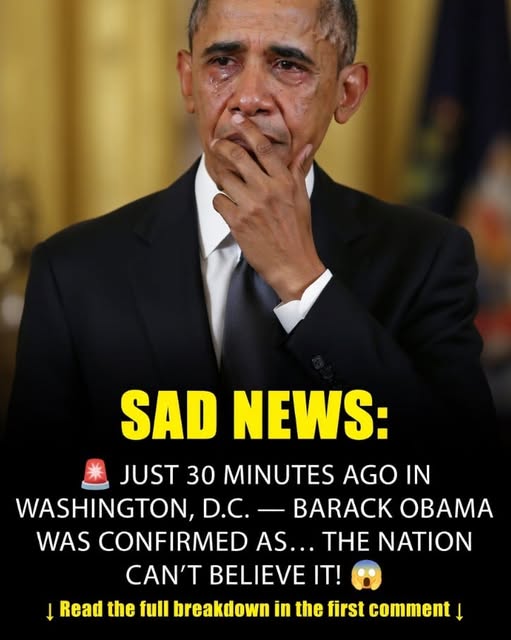
The mask slipped—and for a brief, unsettling moment, the room seemed to forget it was looking at a former president of the United States. There was no podium waiting for him, no teleprompter glowing with carefully tested lines, no backdrop of flags or ceremony to steady the frame. Just Barack Obama, standing in ordinary space, caught somewhere between memory, reflection, and something far more vulnerable than politics.
Witnesses later struggled to describe exactly when the shift happened. It wasn’t dramatic at first—just a subtle change in tone, a conversational thread that brushed too close to something buried deeper than public life usually allows. Obama had been listening, relaxed, almost off-duty in the way few people ever see him. Then something in the exchange landed differently. Not loudly. Not visibly. But precisely.
His expression changed before anyone else reacted.
A flicker—quick, almost imperceptible—moved across his face: recognition mixed with fatigue, the kind that doesn’t come from a single day but from years of carrying decisions that never fully leave you alone. The atmosphere in the room tightened without explanation. Conversations faltered. Even the habitual phone-checking stopped, as if instinctively sensing that something unrepeatable was unfolding in real time.
Then came the pause.
It lasted just a second or two longer than comfort allows, but in that stretch of silence it felt much bigger. Long enough for people to notice it. Long enough for it to matter. His gaze didn’t search for the audience or the room—it drifted inward, as though the conversation had opened a door only he could see through.
There was no collapse, no visible unraveling. That would have been too simple, too theatrical. Instead, there was restraint—the quiet kind that requires more strength than emotion ever does. A small, slightly self-aware smile appeared, not of humor, but of recognition. The kind of smile people give when they realize their inner world briefly surfaced in public and there is no way to put it neatly back in place.
And in that moment, the layers of his public identity seemed to thin.
He was no longer the architect of speeches or the figure framed by history books. Not the strategist of global crises, nor the symbol people project their hopes and frustrations onto. For a brief, unguarded moment, he was simply a man standing still, aware of the weight that never really leaves once it has been carried long enough.
The room moved on quickly afterward, as rooms always do.
But for those who noticed, the silence lingered longer than the moment itself.