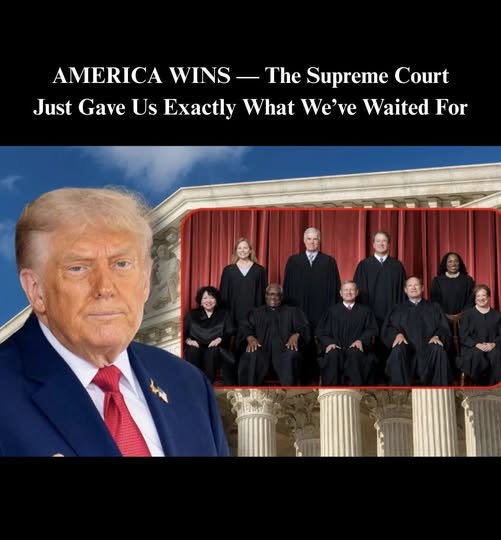
The warning is no longer subtle—it lands like a siren in the middle of a storm. A sitting Treasury Secretary, Scott Bessent, is now openly signaling that it is “very unlikely” the Supreme Court of the United States will intervene to stop Donald Trump from wielding emergency war powers in a way that could redraw the rules of global alliances. The target is not an adversary, but America’s closest partners—European nations now staring down the threat of punishing tariffs designed to force an extraordinary geopolitical concession: a Greenland deal.
Across the Atlantic, the reaction has been swift and uneasy. European troops are already moving in quiet but unmistakable coordination, signaling resolve to defend Danish sovereignty. Financial markets flicker with uncertainty, every headline feeding volatility. Diplomats scramble behind closed doors while public anger simmers, allies caught between disbelief and defiance. What once sounded like an outlandish ambition has hardened into policy pressure with real-world consequences.
At the center of it all is a strategy that has transformed a long-simmering fixation into a constitutional stress test. By tying sweeping economic penalties to the demand for the “complete and total purchase of Greenland,” Trump has pushed the boundaries of presidential authority into terrain few thought possible. The legal foundation—the use of the International Emergency Economic Powers Act—now carries implications far beyond this single dispute. It raises a stark question: can economic force be deployed as a routine instrument of leverage, even against allies, under the banner of national security?
Bessent’s confidence only heightens the stakes. If the Court allows this approach to stand, it could carve out a precedent where future presidents inherit a powerful—and potentially destabilizing—tool for reshaping global relationships. If the Court pushes back, the fallout may be just as severe: shaken markets, a confrontation between branches of government, and a sudden recalibration of executive power.
Caught in the balance is more than a legal ruling. It is the fragile architecture of transatlantic trust, the fate of Greenland itself, and a watching world measuring how far American authority can stretch before it begins to fracture the very alliances it was built to protect.