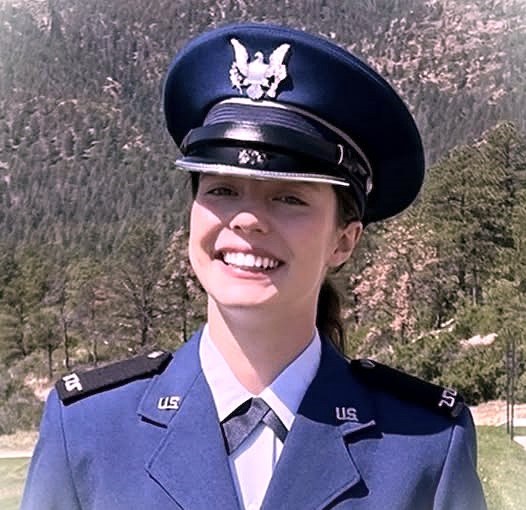
She was meant to rise—to lift off into open sky, to chase horizons few ever reach. Instead, in a quiet dorm room, nineteen-year-old Air Force Academy cadet Avery Koonce was found unresponsive, her journey ending before it had truly begun. Within hours, the unthinkable settled in: a young woman defined by discipline, promise, and quiet determination was gone. There was no accident to explain it, no warning to prepare for it—only a rare, relentless infection moving silently through her body, disguising itself as something ordinary until it was far too late.
What makes a loss like this so difficult to grasp is not just its suddenness, but its contradiction. Avery was strength in motion. She trained harder than most, rose earlier than necessary, and carried herself with a steady focus that inspired those around her. At an age when many are still searching for direction, she already knew hers: to serve, to lead, to heal, and ultimately, to fly. Her dreams weren’t distant fantasies—they were plans in progress, built step by step through discipline, sacrifice, and an unshakable sense of purpose.
In the halls of the Academy, her absence left something deeper than silence. It left a space that felt unfinished. Classmates spoke of the small things first—the way she greeted people by name, how she listened fully before responding, how she made others feel seen without ever drawing attention to herself. She had a rare kind of presence: steady, warm, and unforced. Her laughter came easily, never sharp or unkind, and her encouragement carried weight because it was always sincere.
Those who trained beside her remember more than her physical strength. They remember her consistency—the quiet discipline of showing up, again and again, even on the hardest days. She didn’t just push herself; she lifted others with her. In team runs, she was the one who matched pace with whoever was struggling. In long days of drills and study, she was the calm voice that reminded others why they had started.
As the days passed, grief took shape in rituals both public and deeply personal. Candles flickered against the Colorado night, their soft light reflecting in tearful eyes. Flags lowered in measured, respectful arcs. Shoes struck pavement along familiar running paths, each step echoing memories of races she once ran, of determination she embodied. Teammates retraced those routes not just to remember her, but to feel close to her again—to imagine, even briefly, that she was still just ahead, setting the pace.
But beyond the shock and sorrow, something else quietly endured. In every story told, in every memory shared, Avery remained vividly alive—not as a symbol of tragedy, but as a reflection of purpose. Her life, though heartbreakingly short, was not empty of time. It was full of intention, of effort, of kindness given freely and without expectation.
She is remembered not for the illness that took her, but for the life she was building—the courage she showed in pursuit of something greater than herself, the compassion she carried into every interaction, and the clarity of a future she was determined to earn.
She was supposed to fly. In every way that mattered, she already had.