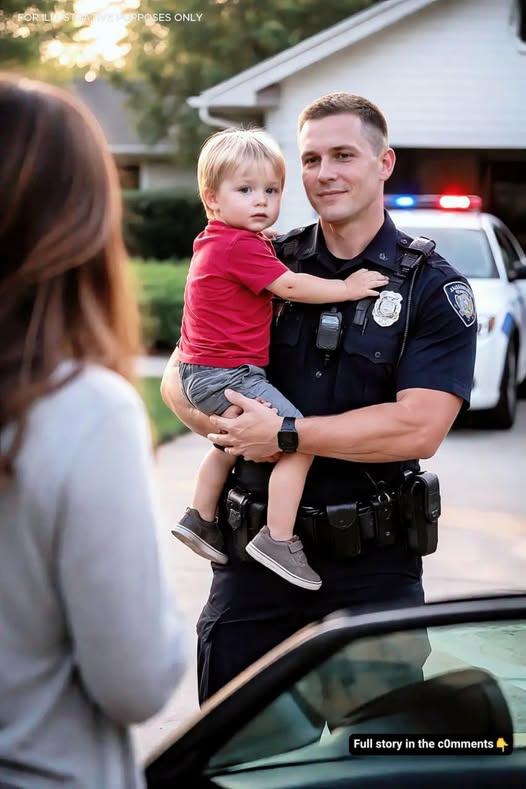
The phone call came in the middle of her hospital shift, slicing through the rhythm of beeping monitors and the quiet shuffle of nurses. Carol’s hands froze mid-chart. There were no details. No reassurances. Only the calm, steady voice of a police officer instructing her to come home immediately. The words felt unreal, like someone had whispered them through water—important, urgent, but almost impossible to grasp.
For three long years, Carol had carried a shadow in her chest, a quiet, gnawing fear that in her absence, her carefully constructed world might crumble. She had imagined countless disasters while bandaging scrapes and soothing crying patients: a fire, an accident, a stranger’s knock. Yet she had never fully allowed herself to face the possibility that it might be something smaller, something terrifyingly ordinary, like her own child in danger.
When she finally pulled into the driveway, heart hammering, she saw the officer holding her two-year-old son. In that instant, all the “what ifs” she had rehearsed collapsed into one vivid, burning reality. Her fear, dormant for so long, finally stood up and took shape.
Carol braced herself, expecting the story she had dreaded for years: a seventeen-year-old with a record wandering too close to her home, a toddler left alone near the edge of traffic, the front door wide open, whispers of blame spreading through the town. Instead, the officer’s words painted a different picture: her son had run barefoot down a street—not toward danger, but straight toward a patrol car—shouting only for his brother. Pure, unfiltered devotion, and a courage that defied his size and age.
That night, in the quiet of the kitchen, Carol sat alone with the day’s events. She let every detail play back, slow and vivid, in her mind: the frantic dash, the trembling hands of the officer, the tiny bare feet pattering across asphalt. The mistake was undeniable; a two-year-old should never be that close to a busy street. But the bravery was undeniable too. Her son had moved not from self-preservation, but from love—love so fierce it outweighed fear, a courage that demanded nothing in return.
For the first time in years, Carol felt the grip of her fear loosen. Logan wasn’t defined by potential disasters, by every nightmare she had feared in her absence. He was defined by his heart, by his instinct to protect, to reach out, and to face the unknown without hesitation. He was the boy who ran barefoot, without hesitation, guided only by love. That night, Carol realized something she had long needed to see: her son’s worth could never be measured by her fears, only by the courage he carried in his tiny, steadfast heart.