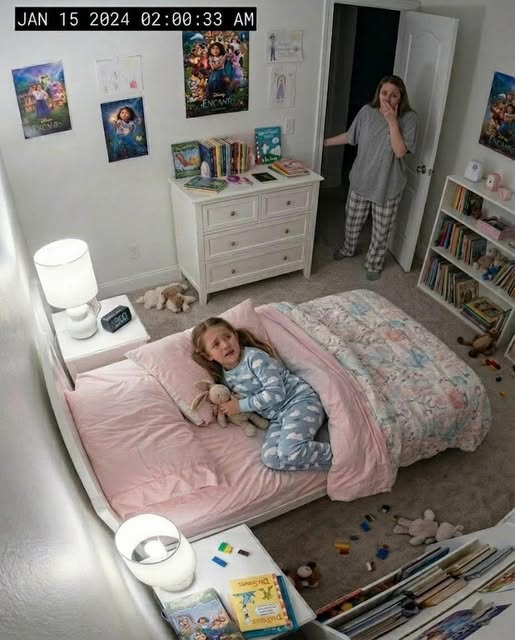
For three weeks, Mia whispered the same words into the dark, her voice small but unwavering: “My bed is too tight.”
It wasn’t a tantrum. It wasn’t fear of the dark. It was something quieter—stranger. The kind of complaint that doesn’t quite make sense, yet refuses to go away.
Her mother, Julia, tried everything. She stripped the bed and replaced the sheets with softer ones. She checked the frame, tightened every screw, ran her hands across the mattress searching for lumps or hidden springs. When nothing seemed wrong, she bought a new mattress altogether—one that smelled faintly of plastic and promise.
Still, every night, as the house settled into silence, Mia would curl under her blanket and whisper the same unsettling words.
“It’s too tight.”
At first, Julia told herself it was imagination. Children translated the world in odd ways. Maybe “tight” meant uncomfortable. Maybe it meant a bad dream she couldn’t explain. But there was something in Mia’s tone that lingered—something that didn’t sound like make-believe.
Then, at exactly 2:00 a.m., everything changed.
Julia’s phone lit up with a motion alert from the small camera she had installed in Mia’s room—just in case. Half-awake, she reached for it, expecting nothing more than a shift of blankets or a restless turn in sleep.
Instead, she froze.
On the screen, the mattress moved.
Not a simple dip. Not the natural rise and fall of a sleeping child. It shifted—subtly, rhythmically—like something beneath it was breathing.
Julia’s chest tightened. The room on the screen was still, the shadows unmoving… except for that slow, unnatural motion beneath her daughter.
She didn’t hesitate.
Throwing off the covers, she rushed down the hall, her pulse pounding louder with every step. When she reached Mia’s room, the air felt wrong—too quiet, too heavy. Mia slept peacefully, unaware.
Julia knelt beside the bed.
For a moment, she almost convinced herself it was nothing.
Then she reached under the mattress.
What she found wasn’t a nightmare creature or something out of a horror story. It was worse in its own, chilling way—small, deliberate, and real. Hidden carefully where no one would think to look was a recording device, subtly vibrating as it worked. A device that had no reason to be there… and no innocent explanation.
In that instant, Mia’s words echoed back with terrifying clarity.
“Too tight.”
She hadn’t been imagining anything. She had been feeling it—the faint, unnatural vibration translated through springs and fabric into a sensation she could only describe in the language she knew.
What Julia uncovered that night wasn’t just a hidden object. It was a truth many overlook: children often sense danger long before adults can name it.
Mia didn’t have the words for “mechanical interference” or “foreign device.” She had feeling. And she trusted it enough to repeat it, night after night, even when no one fully understood.
And Julia—whether by instinct, love, or quiet unease—chose to listen.
She changed the sheets when it seemed unnecessary. She replaced the mattress when it felt excessive. She installed the camera when it felt paranoid. And most importantly, she got out of bed at 2:00 a.m. instead of dismissing the alert.
Each decision, small on its own, became a shield.
Together, they protected her child.
The power of this story isn’t in the technology or the fear—it’s in the choice to take a child seriously when it would be easier not to. Because sometimes, what sounds like imagination is actually perception—raw, unfiltered, and closer to the truth than we realize.
For every parent, every caregiver, the lesson lingers long after the fear fades:
When a child quietly insists something is wrong, don’t rush to explain it away.
Believe them first.
And keep looking… until the world finally makes sense again.