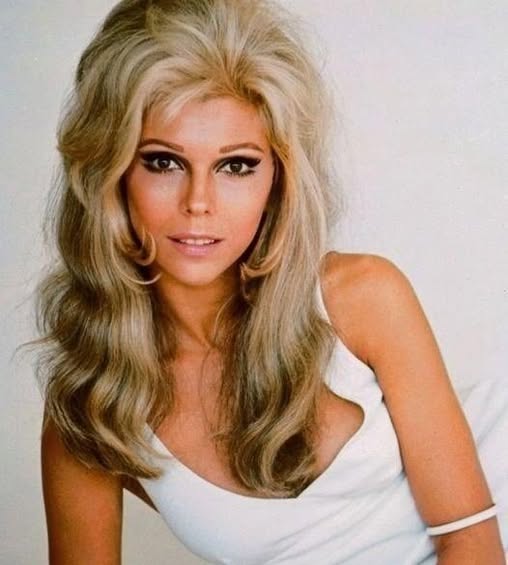
Fame didn’t save her—it sharpened the fall. For Nancy Sinatra, growing up meant living inside the long, echoing shadow of Frank Sinatra—a name so powerful it could open doors, but just as easily close them. Expectations weren’t just high; they were suffocating. Every note she sang was measured against a legend. And for a while, it seemed like the verdict was already written: not enough, not lasting, not her own.
Early on, her career looked less like a rise and more like a slow unraveling. A handful of songs came and went without leaving a mark. Industry insiders whispered. Executives lost interest. The promise of her name began to feel like a burden she couldn’t outrun. She wasn’t just struggling to succeed—she was fighting not to disappear entirely. In a business that thrives on novelty and forgets quickly, she became dangerously close to being filed away as a failed experiment with a famous surname.
But reinvention isn’t always glamorous. Sometimes it’s born out of desperation, sharpened by the quiet fear of being forgotten. Nancy didn’t just tweak her image—she rebuilt it from the ground up. She lowered her voice into something richer, cooler, unmistakably her own. She stepped away from the expectations of who she was supposed to be and leaned fully into who she could become. And then came the moment that changed everything: These Boots Are Made for Walkin’.
It wasn’t just a hit—it was a statement. The song didn’t ask for attention; it demanded it. There was power in it, defiance, a kind of effortless authority that cut through the noise. Suddenly, she wasn’t just “Frank Sinatra’s daughter.” She was a voice, a presence, a force. The world didn’t just notice—they listened. For a while, everything aligned. The music, the image, the timing. She found her rhythm, and the world moved with it.
But fame is fickle, and it never promises permanence. The spotlight that once followed her so closely began to drift. Hits became rarer. The calls slowed, then stopped. Time, relentless as ever, moved forward without waiting. And once again, she stood at the edge of obscurity—only this time, she understood what it meant.
Because life, beyond the stage and the charts, kept unfolding. She faced losses that no applause could soften. She loved, and she grieved. She raised her children, building something real and lasting far from the glare of the spotlight. There’s a peculiar loneliness in being both remembered and forgotten at once—an icon in photographs, an afterthought in the present. Nancy knew that space well.
And yet, she refused to vanish quietly.
Instead of clinging to a frozen version of herself, she chose evolution. She stepped back into the public eye on her own terms—posing boldly, performing when she wanted, curating her legacy rather than letting others define it. Where the industry often demands youth and reinvention on its terms, she offered something rarer: authenticity without apology.
She didn’t outrun the fall. She didn’t pretend it never happened. She walked straight through it—head high, eyes forward, boots on.