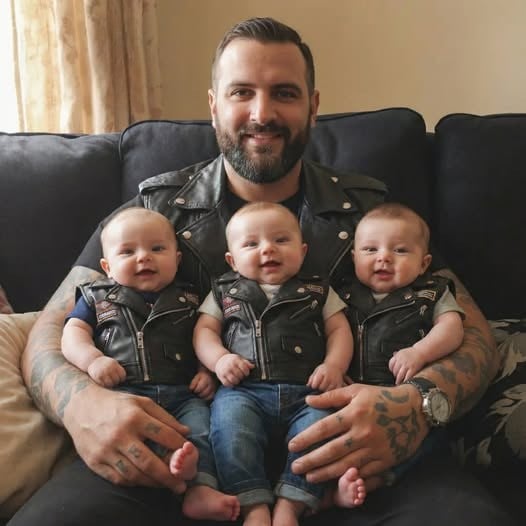
The first blow didn’t echo beneath the high ceilings of a courtroom.
It struck in the sterile, flickering light of a hospital hallway—where grief came fast, raw, and irreversible. Blood clung to Diesel’s hands, not as guilt, but as proof that he had been there when it mattered most. On the cold floor lay his sister, Leah—gone too soon, her story cut short before anyone cared to listen. And somewhere beyond that moment, a different kind of violence was already beginning—quiet, calculated, dressed in wealth and influence.
A man named Joe, polished in tailored suits and shielded by money, stepped forward with a claim that felt less like love and more like ownership. He wanted the triplets—the sons he had once abandoned without a second thought. To him, they were not children with memories and fears, but assets to be reclaimed, rewritten into a narrative that made him look whole again.
Diesel didn’t look like the kind of man courts trust. His skin told stories in ink, his silence carried the weight of war, and his past was easy for strangers to reduce to a single word: trouble. They called him “gang trash,” dismissed his loyalty as menace, his devotion as instability. But they didn’t see the nights he stayed awake, holding three crying infants who only knew one truth—that he was the one who stayed.
At 3 a.m., while the world slept, Diesel moved through the quiet like a guardian—warming bottles, whispering reassurances, learning the fragile language of fatherhood without ever being taught. Every scraped knee, every fever, every trembling voice calling, “Uncle Diesel, don’t let them take us,” etched itself into his soul far deeper than any scar or tattoo ever could.
Meanwhile, Joe built his case the way men like him always do—through distance. Clean records. Controlled narratives. A version of the past where Leah’s pain was invisible and his absence was justified. For a while, it worked. The system leaned toward him, drawn to the shine of credibility that money can buy.
But truth has a way of gathering quietly, in places no one thinks to look.
On the day of the final hearing, the courtroom filled—not with power brokers or polished allies, but with people Joe had never noticed. They came in worn jackets and work boots, carrying stories instead of status. A widow whose bike Diesel had fixed so she could get to work. A neighbor whose lights stayed on because Diesel paid the bill without asking for thanks. Veterans who were still alive because he answered the phone when no one else would, in the darkest hours of the night.
They didn’t come to speak loudly. They came because they had seen him.
And for the first time, so did the judge.
She didn’t see a stereotype. She didn’t see a label. She saw presence. She saw sacrifice. She saw a man who had stepped into the wreckage of someone else’s life and chosen—every single day—to stay.
When the decision came, it didn’t feel like victory. It felt like something heavier, something earned in silence and suffering. Diesel wasn’t just granted custody—he was recognized.
Years passed, and the boys grew—not into the shadows of their past, but into something stronger. And one day, in a moment quieter than all the battles that came before, they chose his name as their own.
Not because they had to.
Because they wanted to.
And in that moment, Diesel understood something the courtroom could never fully capture: he hadn’t just fought for a family—he had built one. From loss. From defiance. From love that refused to walk away.
The system had chosen a side once.
But in the end, it was the truth that showed up—and refused to leave.