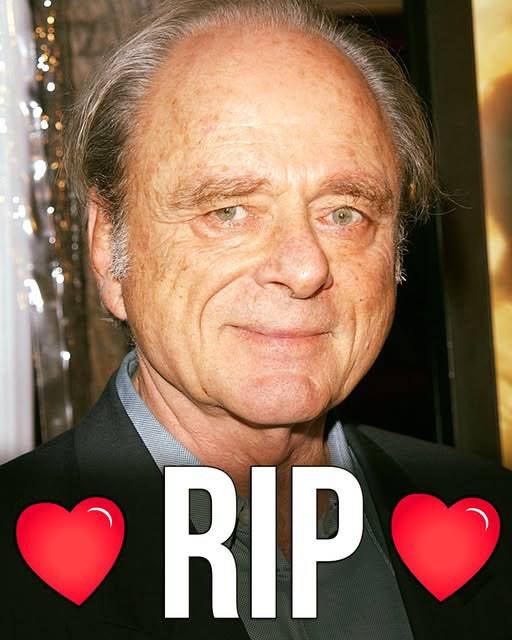
Harris Yulin never sought the glare of fame. He never pursued the fleeting sparkle of the spotlight, nor did he chase headlines or the kind of celebrity that demands presence on red carpets. What he built, over a career spanning more than half a century, was something infinitely rarer: a life forged in discipline, in craft, in the quiet, unglamorous labor of understanding human behavior and giving it truthful form on stage and screen. His passing, at 87, from cardiac arrest in New York City, leaves a stillness that is almost philosophical—a silence that feels intentional, as if Yulin himself were delivering one final lesson on restraint and gravity. Those who worked alongside him insist that his true legacy is not measured in awards or marquee posters, but in the rehearsal rooms, the classrooms, and the quiet spaces where actors wrestle with text, with emotion, with themselves. In these spaces, his voice still lingers—tempering ego, shaping choices, reminding those who follow him that acting is not a performance, but a moral engagement with life itself.
He was part of a rare class of actors whose mere presence could anchor a scene, whose arrival on screen brought coherence and depth even when he occupied a corner of the frame. In films and television shows as varied as Scarface, Training Day, Ghostbusters II, Frasier, Ozark, and countless others, Yulin was rarely the leading man—but he was always the fulcrum. He carried the moral and emotional weight of a story without ever drawing attention to himself. His performances were defined by subtlety, by exacting precision, by an almost imperceptible intensity. He did not announce his importance with spectacle; he revealed it line by line, breath by breath, gesture by gesture, leaving audiences with a quiet, undeniable sense that they were witnessing something honest, essential, and dangerous in its authenticity.
Beyond the camera, his influence deepened in the classrooms of Juilliard, where generations of actors sat under his watchful eye. There, he taught that craft was not a shortcut to recognition, that applause and acclaim were fleeting distractions from the real work. Acting, he argued, was a lifelong discipline—a moral and ethical engagement with human behavior, with truth, with vulnerability. Students recall his exacting standards, his relentless insistence that the work itself mattered more than the worker, that every word, pause, and intention must be earned. His lessons were hard but fair, his expectations uncompromising, and his belief in the transformative power of art unwavering.
Yulin is survived by his wife, Kristen Lowman, and by countless students and performers who carry his teachings forward. He leaves behind no cult of personality, no glittering empire of fame, but something far more enduring: a living practice of attention, patience, and moral rigor. He reminds us—still, even in absence—that to act is to listen harder, to speak less, and to mean everything we say and do. In a world that celebrates noise, Harris Yulin’s life stands as a testament to the enduring power of quiet mastery.