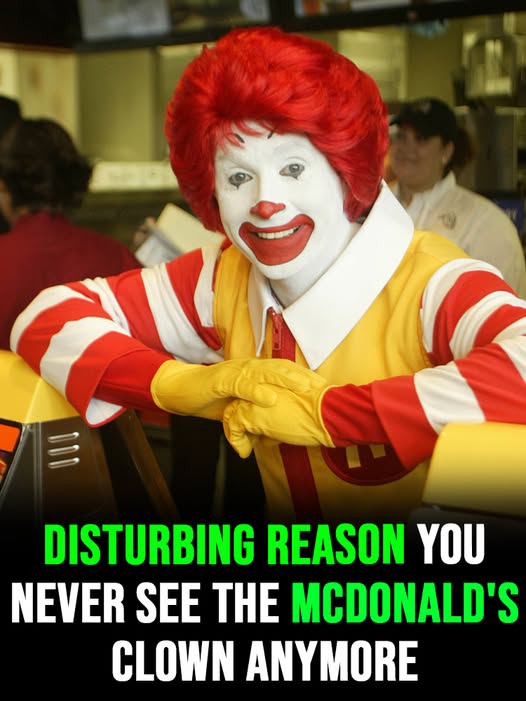
For decades, he was the smiling emblem of childhood itself. The painted grin, the oversized shoes, the bright red hair—it wasn’t just a costume; it was a promise of joy, mischief, and safe fun. Ronald McDonald wasn’t merely a mascot. He was a companion at birthday parties, a visitor in hospital wards, a cheerful presence on television screens, playgrounds, and school trips. Children waved at him as if he were a friend, parents trusted his familiar face, and the McDonald’s brand wrapped itself in that smile so tightly that for an entire generation, the clown felt less like a marketing figure and more like family.
And then, almost overnight, he was gone. No grand farewell tour, no nostalgic documentary, no tearful goodbyes aired on TV. One day, Ronald McDonald was everywhere; the next, he had vanished, leaving behind only a sense of quiet absence and whispered questions: what happened? Why did the clown disappear from the world he once dominated?
The answer, it seems, lies in a collision of culture, fear, and corporate strategy. The “creepy clown” phenomenon that swept across 2016 changed everything. Viral videos of strangers in clown costumes lurking in dark streets, police warnings, and panicked communities turned an icon of innocence into a figure of unease. The painted smile, once a beacon of fun, now carried an undertone of menace. Children still loved him, but the world around them had begun to see something darker.
McDonald’s, ever attuned to public perception, quietly pulled Ronald back from the spotlight. There would be no more daily visits, no more playful TV commercials, no more appearances at children’s hospitals in the limelight. At the same time, the company was reimagining itself for a new era: minimalist interiors, sleek digital menus, Instagram-ready meals, and a more “grown-up” brand aesthetic. In that vision, there was no room for a clown. Ronald lingered on only in charity work, hospital visits, and occasional corporate promotions—a ghost of the past, a reminder of a time when life felt simpler and brighter.
For millions, his absence is more than a marketing decision. It marks the end of an era of innocence, color, and unselfconscious joy. The red-and-yellow clown may have receded into memory, but the space he once filled feels emptier, quieter, and oddly nostalgic. In the era of digital branding, viral fears, and corporate reinvention, Ronald McDonald isn’t just gone; he’s a symbol of the childhoods we once knew, suddenly remembered with a pang of longing.