A diagnosis like Glioblastoma has long carried a chilling reputation in medicine. For decades, doctors have spoken about it with a kind of reluctant honesty: aggressive, relentless, and almost impossible to stop. Patients who hear the name often hear something else alongside it — the quiet implication that time is limited. Surgeons cut, oncologists radiate, chemotherapies attack, yet the tumor almost always finds a way back.
That is why what happened inside a small clinical experiment in 2024 made even seasoned physicians pause.
It began quietly in March at Mass General Brigham, where a team of researchers decided to attempt something bold. Three patients with recurrent glioblastoma had reached the point many in oncology know too well — the point where standard treatments had already been exhausted. Surgery had been attempted. Radiation had done what it could. Chemotherapy had failed to stop the disease from returning. Options were running out.
Instead of accepting the familiar trajectory, the researchers turned to an emerging frontier in cancer therapy: CAR‑T therapy, short for Chimeric Antigen Receptor T-cell therapy.
CAR-T treatments have already transformed outcomes for some blood cancers by reprogramming a patient’s own immune cells into specialized tumor hunters. But brain tumors, especially glioblastoma, have remained stubbornly resistant to these approaches. The brain’s protective barriers, the tumor’s genetic complexity, and the cancer’s ability to evade immune detection have made it one of the hardest environments for immunotherapy to penetrate.
So the team changed the strategy.
Rather than relying on a standard CAR-T design, they engineered a variation. The therapy combined CAR-T cells with carefully selected antibodies that acted almost like targeting beacons, helping guide the immune attack toward specific molecules on the tumor’s surface. In effect, the scientists tried to sharpen the immune system’s aim.
Even the delivery method was different.
Instead of sending the therapy through the bloodstream — where many immune cells struggle to cross into the brain — doctors infused the engineered cells directly into the cerebrospinal fluid surrounding the brain and spinal cord. It meant the modified immune cells would encounter the tumor almost immediately, face-to-face.
No one expected miracles.
But the MRI scans soon began telling a story that was impossible to ignore.
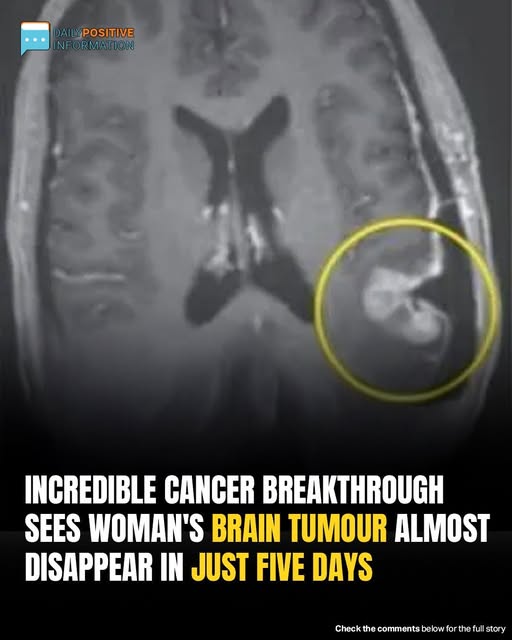
One patient’s tumor shrank 18.5 percent in just two days. Within ten weeks, that reduction had passed 60 percent. Another patient showed rapid signs of regression as the immune cells appeared to attack the cancer’s core. The third patient produced visible changes on MRI imaging within only five days of treatment — an almost unheard-of pace for a cancer that normally advances with brutal consistency.
For the surgeons and oncologists watching the images appear on their screens, the reaction was a mixture of excitement and caution. These were not large clinical trials. There were only three patients. The results, while dramatic, were early and fragile. Glioblastoma is notorious for adapting and returning.
No one is calling it a cure.
But something important happened.
For decades, glioblastoma has been described in medical literature as a nearly unbeatable disease, one where breakthroughs often stall and survival statistics barely move. This tiny trial — just three people willing to take a final gamble — offered the first clear hint that the cancer might not be as invincible as once believed.
For patients and families facing the diagnosis, that distinction matters.
Because in medicine, the first crack in a seemingly unbreakable wall can sometimes be the beginning of everything that follows. 🧠🔬✨