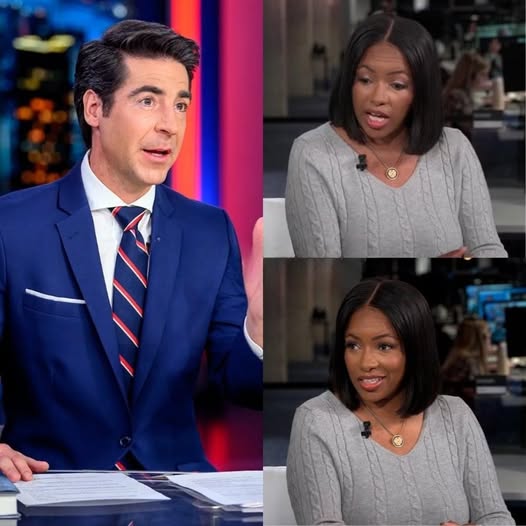
The studio didn’t erupt. It didn’t tremble. It went quiet.
For a fleeting moment, even the hum of the cameras seemed to pause. Jesse Watters had picked up Rep. Jasmine Crockett’s post—a blistering, no-holds-barred message that, in another setting, would have triggered the usual on-air spectacle. Viewers leaned in, expecting the sparks, the quips, the snark that had become almost ritual on cable news. They waited. And waited. Nothing came. No clever retort. No sarcastic zing. Just the post itself, hanging in the air like a suspended challenge, daring everyone in the room—and at home—to actually hear it.
In a landscape designed to reward escalation, Watters reportedly did the unthinkable: he slowed down. He read the words aloud exactly as they were written, without embellishment, without mockery, without the predictable rush to seize the next viral moment. There was no attempt to color the story, no effort to wrestle the narrative into a prepackaged outrage. For once, the power of the moment didn’t come from what he said—it came from what he refused to say.
That refusal created a tension unlike any regular broadcast. It wasn’t the manic tension of a fight, nor the adrenaline of a verbal sparring match. It was quiet, deliberate, unsettling in its simplicity. Viewers weren’t being told how to react. They weren’t nudged toward anger, amusement, or agreement. They were left alone with the words themselves, forced to grapple with their weight, their implication, their honesty.
In a media ecosystem where every slight is an invitation to escalate and every story is a chance to dominate the next trending hashtag, the segment hinted at something almost revolutionary: a glimpse of conflict without performative chaos. It suggested a rare kind of authority—the authority that comes not from controlling emotion, but from stepping back, letting the narrative breathe, and letting the audience decide.
Whether you see Watters as a provocateur, a pioneer, or simply another voice in the endless cycle of cable commentary, the moment lingers. It lingers because it whispers a possibility rarely seen on television: that sometimes, silence, restraint, and fidelity to the story itself can speak louder than the loudest shout.