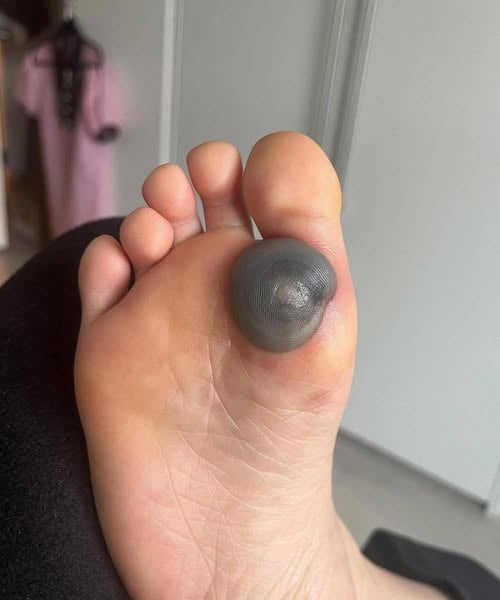
Blood blisters have a way of appearing out of nowhere, catching you off guard and making your heart race. One moment your skin seems perfectly normal, and the next, there it is—a dark, swollen bubble that looks like a serious warning sign. The mind immediately jumps to worst-case scenarios: Is it dangerous? Could it be a sign of cancer? Should you poke it, drain it, or rush to the emergency room? The reality, however, is far less alarming—and actually quite fascinating.
That deep red or purplish bubble is usually your body’s clever, almost instantaneous response to minor trauma. When small blood vessels just under the skin break due to pressure, friction, or a sudden pinch, blood leaks into the area but becomes trapped beneath the surface. The skin above remains intact, forming a raised, tender blister. These can pop up in all sorts of places: on your fingers after handling tools, on your palms from gripping a racket, on your toes from tight shoes, on the soles of your feet after a long walk, or even inside your mouth following a bite or dental procedure.
Though the sight of a blood blister can make anyone a little uneasy, in most cases, it’s a minor injury that your body is fully capable of healing on its own. Typically, it resolves within one to two weeks. During that time, the best strategy is surprisingly simple: resist the urge to burst it, protect the area from further irritation, and use gentle measures like a cold compress to relieve pain and swelling.
If the blister does rupture accidentally, care is key to preventing infection. Wash the area gently with soap and water, apply a mild antiseptic, and cover it with a clean bandage. Keep an eye on it, and seek medical advice if you notice anything unusual—like intense pain, delayed healing, signs of infection, or if you have underlying health conditions such as diabetes or circulation issues, which can complicate even minor injuries.
Understanding blood blisters transforms them from a source of panic into a glimpse at your body’s remarkable ability to protect itself. That sudden, alarming bubble is less a threat and more a silent testament to your skin’s resilience—a reminder that sometimes, the body knows exactly how to handle bumps, bruises, and pressure before your mind even has a chance to worry.