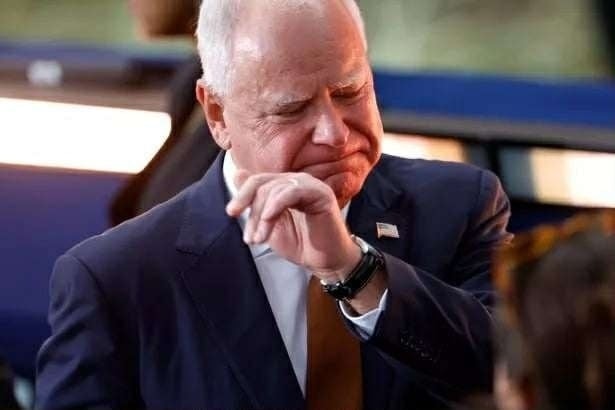
Just moments ago, a dramatic political milestone unfolded in the heart of the Midwest. In a move that instantly reshaped the national conversation, Tim Walz, the governor of Minnesota, was officially confirmed as the vice-presidential nominee for the Democratic Party. The announcement marked a defining moment not only in Walz’s own career but also in the evolving story of American politics, elevating a leader once known primarily within his state to one of the most visible positions on the national stage.
The confirmation arrived with the intensity of breaking thunder across the political landscape. Within minutes, news alerts flooded phones, television networks cut to live coverage, and social media erupted with reactions from supporters, critics, and analysts alike. For many Democrats, Walz’s selection represents a strategic and symbolic choice—a candidate whose Midwestern roots, measured tone, and pragmatic leadership style could help bridge political divides during an increasingly polarized era.
Throughout his tenure as governor, Walz cultivated a reputation for steady, solutions-focused leadership. A former teacher, football coach, and National Guard member, he built his political identity around issues that resonate deeply with everyday Americans: strengthening public education, expanding access to healthcare, and protecting the economic security of working-class families. His calm demeanor during moments of crisis and his emphasis on practical governance helped him earn respect across party lines, even among critics who disagreed with his policies.
Back home in Minnesota, the reaction was immediate and deeply emotional. At the steps of the Minnesota State Capitol in St. Paul, crowds quickly gathered as the news spread. Supporters waved Minnesota flags, some draped in the state’s colors, others holding handmade signs celebrating Walz’s rise. The atmosphere felt less like a typical political rally and more like a spontaneous civic celebration. Chants of his name echoed across the Capitol grounds while car horns blared in approval along nearby streets.
Inside the state’s political circles, leaders from both major parties offered acknowledgments of Walz’s leadership. Several lawmakers praised his ability to communicate with ordinary citizens in plain language—an increasingly rare skill in national politics. Even some political opponents conceded that Walz’s personal style, marked by patience and approachability, helped him build unusual levels of trust among Minnesota voters.
For many residents, the moment carries meaning beyond a single political appointment. Walz’s journey—from a small-town teacher and coach to governor, and now a vice-presidential nominee—reflects a narrative that resonates deeply with Midwestern identity. Supporters see his rise as proof that leadership grounded in community values, public service, and humility can still find its way onto the national stage.
As the presidential campaign intensifies, Walz’s nomination is already being framed as a unifying signal for Democrats hoping to appeal to voters across regional and ideological lines. Party strategists believe his Midwestern credibility and focus on kitchen-table issues could help strengthen the ticket in states where economic concerns and cultural trust often outweigh partisan rhetoric.
For now, however, the focus in Minnesota remains personal and celebratory. In coffee shops, classrooms, and local government offices across the state, conversations are turning to the same astonishing realization: a leader who once walked their neighborhoods and spoke at their town halls is now poised to campaign for one of the highest offices in the country.
What began as a local story of service has suddenly become a national one—and for many Minnesotans watching this moment unfold, it feels like history rising straight from their own backyard. 🇺🇸