Iran’s rise as one of the Middle East’s most formidable missile powers did not happen overnight. Over decades, the country has steadily built an expansive and increasingly sophisticated arsenal designed to strengthen its military deterrence and project power across the region. Today, analysts widely regard Iran as possessing one of the largest and most diverse missile stockpiles in the Middle East, a capability that has become a central pillar of its defense strategy.
A 2022 report from the United States Central Command estimated that Tehran may possess more than 3,000 ballistic missiles of varying types and ranges. If accurate, that number places Iran among the nations with the most substantial missile capabilities in the region. The arsenal includes short-range, medium-range, and experimental advanced systems, each designed for specific tactical or strategic roles.
Short-Range Missiles: Speed and Saturation
Among the most widely deployed weapons in Iran’s inventory are short-range ballistic missiles, particularly the Fateh missile family and the Zolfaghar missile. These missiles are designed primarily for striking targets relatively close to Iran’s borders—such as military bases, infrastructure, or strategic installations.
What makes these systems particularly notable is not just their range but the tactics associated with their use. Iranian military planners emphasize rapid, multi-missile launches that occur within seconds or minutes of each other. This strategy, sometimes described as “saturation attack,” aims to overwhelm an adversary’s air-defense systems and drastically reduce the time available for interception.
A dramatic example of this capability occurred in January 2020 following the killing of Iranian commander Qassem Soleimani during a U.S. drone strike. In response, Iran launched multiple ballistic missiles against U.S. military installations in Iraq. The strikes targeted bases such as Ain al‑Asad Airbase and marked the first time Iran had openly fired ballistic missiles at American forces. The coordinated attack demonstrated both the speed and precision Iran claims to have developed in its missile forces.
Medium-Range Missiles: The Core of Strategic Power
Beyond short-range weapons lies the backbone of Iran’s strategic deterrent—its medium-range ballistic missiles. Systems like the Shahab‑3 missile, the Khorramshahr missile, and the Sejjil missile can reportedly reach targets up to roughly 2,000 kilometers away.
This range is significant because it allows Iran to potentially strike targets across much of the Middle East. Iranian officials have repeatedly stated that the 2,000-kilometer range represents a deliberate strategic ceiling for the country’s missile development—for now. However, many Western analysts believe the underlying technology could allow Iran to extend that range further if the political decision were made.
U.S. intelligence assessments suggest Iran has developed around 14 distinct types of ballistic missiles. Each generation has introduced incremental improvements in guidance systems, fuel efficiency, payload capacity, and mobility.
The Hypersonic Ambition
In recent years, Iran has turned increasing attention to next-generation weapons technologies. One of the most widely discussed projects is the Fattah‑2 hypersonic missile, which Iranian officials claim can travel at extreme speeds while maneuvering during flight.
Hypersonic weapons are particularly difficult to intercept because they can move at speeds greater than Mach 5 and alter their trajectory while in flight. If operational capabilities match official claims, such systems could significantly complicate modern missile defense networks. However, independent verification of the missile’s full capabilities remains limited, and many analysts continue to debate how advanced the technology truly is.
Cruise Missiles and Low-Altitude Threats
Iran’s missile arsenal is not limited to ballistic systems. The country has also developed cruise missiles, which fly at lower altitudes and follow terrain contours to avoid radar detection. One of the most prominent examples is the Soumar cruise missile.
Many experts believe the Soumar was derived from the Soviet-designed Kh‑55 cruise missile, reportedly acquired from Ukraine in the early 2000s. Unlike ballistic missiles, which travel high into the atmosphere before descending onto their targets, cruise missiles behave more like unmanned aircraft—flying low and navigating complex routes. This makes them harder to detect and intercept, adding another layer to Iran’s strategic toolkit.
The “Missile Cities” Underground
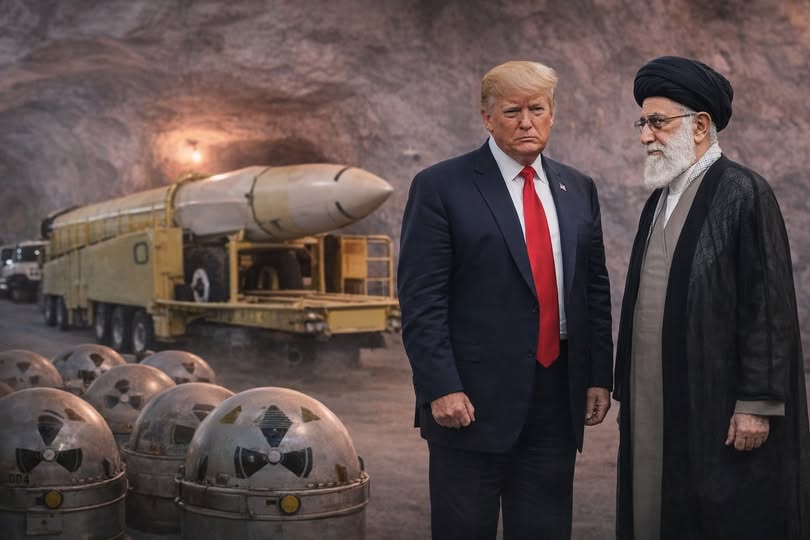
Perhaps one of the most striking aspects of Iran’s missile strategy lies beneath the surface—literally. Over the past decade, Iranian authorities have revealed footage and satellite imagery of vast underground facilities known informally as “missile cities.”
These bases are constructed deep underground, sometimes hundreds of meters below the surface, and feature long tunnels, storage depots, and hidden launch platforms. By placing missiles in hardened subterranean facilities, Iran aims to protect its arsenal from pre-emptive airstrikes or missile attacks.
Images released by Iranian state media show extensive tunnel networks filled with rows of missiles and transporter-erector-launchers ready for deployment. The strategy reflects a broader emphasis on survivability: even if surface infrastructure were targeted, large portions of the arsenal could remain intact and ready to retaliate.
The Growing Role of Drones
Alongside missiles, Iran has increasingly embraced unmanned aerial systems as a critical part of its military doctrine. One of the most widely known systems is the Shahed‑136 loitering munition.
Often described as a “kamikaze drone,” the Shahed-136 is relatively inexpensive to manufacture compared to traditional missiles. Its design allows it to fly long distances before crashing directly into a target and detonating. Because these drones can be launched in large numbers, they can potentially overwhelm expensive air defense systems such as the MIM‑104 Patriot.
This cost imbalance—cheap drones versus costly interceptors—has become an increasingly important factor in modern warfare calculations.
Damage, Recovery, and Ongoing Debate
Some Israeli officials have argued that Iran’s missile infrastructure suffered significant damage during recent regional tensions and military exchanges. However, satellite imagery and independent defense analysts suggest that Iran has been able to restore much of its operational capacity relatively quickly.
This resilience reflects years of investment in dispersed facilities, underground storage, and domestic manufacturing capabilities.
Limits and Future Possibilities
Despite its large regional arsenal, U.S. intelligence assessments currently indicate that Iran does not yet possess an operational intercontinental ballistic missile capable of striking the continental United States. Most projections suggest that such a capability, if pursued, would not likely emerge before the mid-2030s.
Nevertheless, Iran’s missile program remains one of the most closely watched military developments in the world. For supporters inside the country, it represents a vital deterrent against foreign threats. For critics and regional rivals, it remains a source of deep strategic concern.
As geopolitical tensions continue to evolve, Iran’s growing missile and drone capabilities ensure that the program will remain at the center of international debate for years to come.