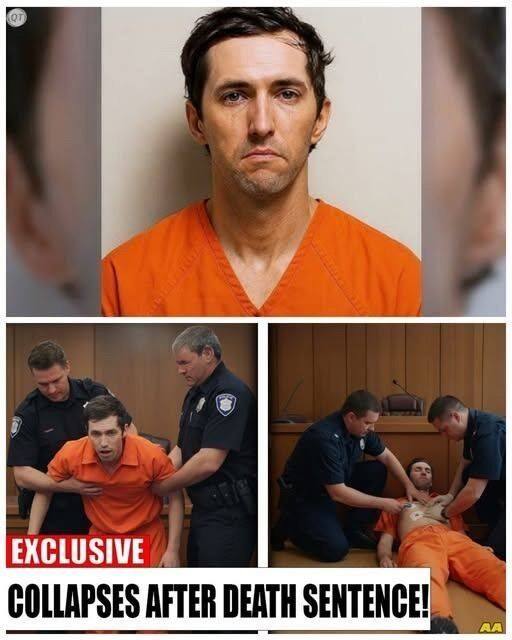
When the judge’s voice rang out with the words “death penalty,” an eerie hush fell over the packed courtroom. For a heartbeat, time seemed to suspend itself — until the defendant, overwhelmed by the weight of what had just been pronounced, sagged in his chair and collapsed. What had been a courtroom filled with tension and anticipation suddenly became a scene of palpable human collapse: raw, unforgettable, and seared into the memories of everyone present. Families who had traveled from far and wide sat in stunned silence, torn between sorrow, shock, and fear, as the full force of the justice system’s most severe judgment washed over them.
This dramatic sentencing in the Charlie Kirk shooting case brought to a close a trial that had riveted the nation, dominating headlines and sparking fierce public debate. Yet, while the judge dutifully formalized the jury’s recommendation of capital punishment after painstaking deliberations, that final gavel strike was not an ending — it was more like a grim beginning. For days prior, jurors had labored under the heavy burden of balancing aggravating circumstances against any mitigating factors, all within the rigid structure of America’s capital punishment laws. In that decisive room, emotions ran high: the defendant’s sudden collapse, the judge’s stern stillness, and the strained expressions of loved ones on both sides revealed how deeply human this legal process truly is.
Outside the courtroom’s doors, the repercussions of the sentencing rippled quickly into the broader public sphere. Within minutes, social media buzzed, editorial pages lit up, and commentators across the country weighed in. Supporters of the verdict declared it just and proportionate to the severity of the crime; opponents countered with urgent questions about the morality of state‑sanctioned execution and the irreversible nature of the punishment now set in motion. Legal experts stressed that, despite the intense emotions, it appeared the trial had adhered to every procedural safeguard — but even that reassurance did little to quell the rising tide of debate.
And now, as the inevitable cascade of automatic appeals begins — potentially stretching over years — the country finds itself once again confronting the thorny, unresolved questions at the heart of capital punishment: Does it truly deter the worst crimes? Can any justice system ever be infallible? And what does it mean, in a society that values life, to elect death as a sentence? As higher courts prepare to pore over the trial record and scrutinize every ruling, the Charlie Kirk case refuses to fade from view. It stands, for many, as a stark and sobering reminder of both the finality and the profound controversy of the ultimate penalty in American justice.