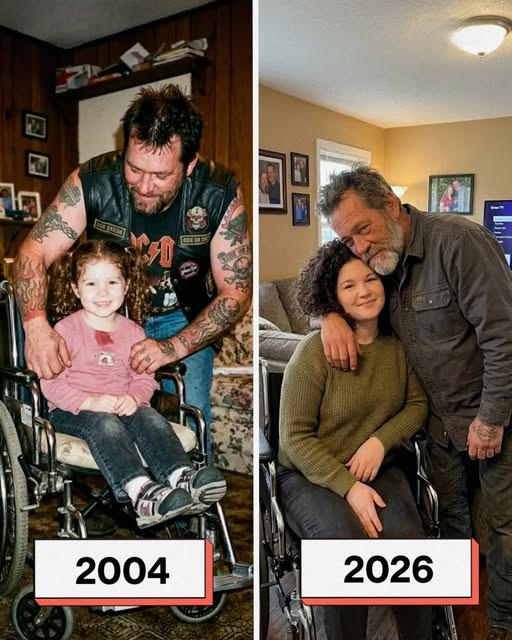
The truth didn’t arrive gently. It detonated. Not in whispered conversations or subtle hints, but in a single envelope, tucked into the back of a drawer, discovered only after the funeral. Eight pages of handwriting, each word sharp enough to cut, each line peeling back the layers of a childhood she had believed was safe. A confession. A revelation that transformed the memories of laughter, lullabies, and scraped knees into a crime scene she had unknowingly inhabited. The man who had carried her, bathed her, fought the world on her behalf—the uncle she had trusted above all—was not only her protector. He was, in some shadowed way, complicit in the night that stole her parents and shattered her body.
For years, she had built her life on a simple story: there had been a crash, her parents had died, she had survived, and he had saved her. Grief had edges she could navigate; it was painful but navigable, like the predictable bruises of childhood scraped knees. But the letter split that neat narrative in two. Suddenly, the man who had woken through countless nights to turn her, who had learned to braid hair with clumsy patience, who had tangled with insurance agents for hours on end, was not just the hero she’d always known. He was also a man who had stood aside—or worse, allowed—a drunk driver to take the keys, setting the chain of tragedy in motion.
She returned to rehab that morning, the harness tightening around her shoulders as the treadmill hummed beneath her. Each step was a duel with history. Her legs shook not just with muscle memory but with memory itself. Each misstep felt like an argument with the past; each moment she stayed upright was a small act of rebellion against the story she had been told. Forgiveness did not arrive in a single, cinematic gesture. It came slowly, in fragments, hidden in the ordinary: in the scent of basil leaves she could almost feel him tending in the kitchen, in the awkward, imperfect braids he had practiced until she smiled, in the quiet trust he had carried like a burden for her.
He had carried his guilt by carrying her. And now, she carried herself. Not in denial of what had been done, not by erasing the complexity of his actions, but by refusing to be pinned beneath it. She stepped forward, each movement a declaration: that love, guilt, and secrets can exist at once, but survival—hers—was hers alone.