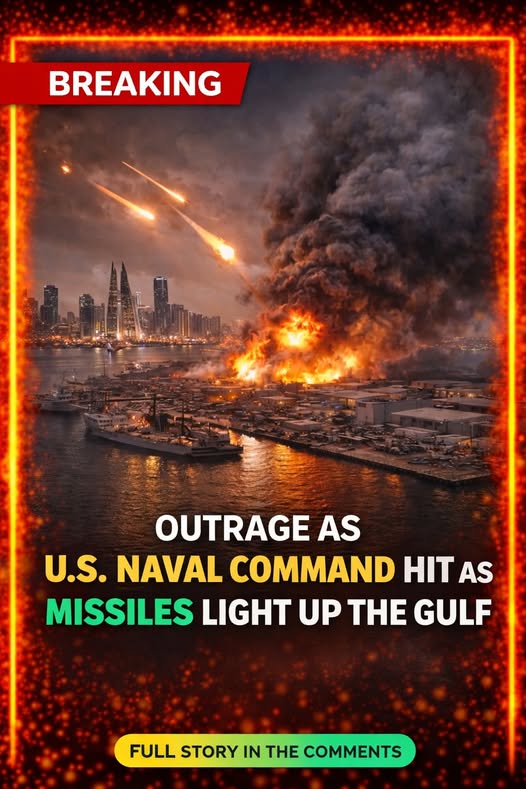
Smoke billowed into the sky before anyone could fully comprehend the magnitude of what had just erupted. Sirens wailed across the city, explosions shattered the stillness, and a stunned silence settled over officials scrambling to grasp the unfolding chaos. In an instant, a routine day in the Gulf transformed into a scene of confusion, fear, and mounting tension. A U.S. naval hub, long considered a secure foothold in the region, was thrust into the epicenter of a rapidly escalating confrontation. The reverberations were immediate: financial markets wavered, embassies issued urgent warnings, and millions of civilians felt the far-reaching tremors of a crisis that suddenly felt dangerously close.
The reported Iranian strike near Naval Support Activity Bahrain, home to thousands of U.S. personnel, pierced the fragile illusion that regional confrontations could remain hidden in the shadows. For years, the Gulf had been a chessboard of proxy conflicts and covert operations, a theater where major powers tested each other through indirect means. Now, that delicate balance appears to be unraveling. The alleged “precision response” from Iran, claimed to follow the shadowy U.S.–Israeli Epic Fury, signals a stark shift: a newfound readiness to strike overt, high-profile targets and take direct, unmistakable action.
The consequences extended far beyond the borders of Manama. Air raid sirens blared, residents scrambled to shelters, and everyday routines were instantly suspended. In the financial world, oil prices surged, turning distant explosions into global economic anxiety felt from New York to Tokyo. But for those living in the Gulf, the political calculations mattered far less than the raw, immediate fear: fear of the next strike, the next misstep, the next sleepless night spent wondering if this was a contained exchange—or the opening act of a conflict with no clear end. Each passing hour magnified uncertainty, each news alert a reminder that the fragile peace in the region could shatter again at any moment.
What had started as a localized incident now seemed to foreshadow a dangerous escalation, one that could redefine the contours of regional stability and redraw the lines between covert skirmishes and open confrontation. The Gulf, long a theater of proxy tension and calculated restraint, was showing cracks—and the world was watching as those fissures widened with every passing second.