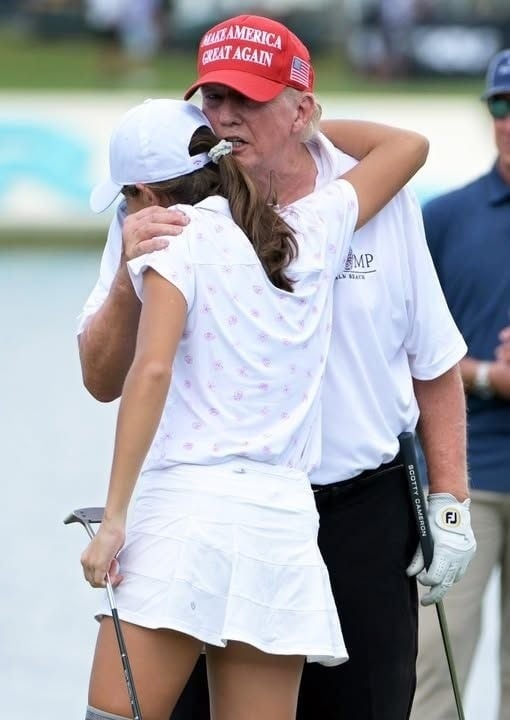
Her voice trembled—but her message carried across the arena with unmistakable clarity.
In the span of a single evening, 17-year-old Kai Trump transformed from a largely private presidential granddaughter into one of the most talked-about young figures in America. Under the glare of television lights and the scrutiny of a divided nation, she stood poised and composed. Yet behind that public moment lies a life shaped by striking contrasts: a childhood framed by towering skyscrapers and Secret Service details, but also filled with ordinary teenage laughter, family dinners, and the familiar comfort of calling her grandfather “Grandpa.”
Born in New York City on May 12, 2007, Kai Madison Trump entered the world a little earlier—and a little more dramatically—than expected, reportedly making her first public appearance at a charity event before her official due date. She was named after her maternal grandfather, the Danish jazz musician Kai Ewans, a tribute that quietly connects her to an artistic legacy far removed from the thunder of American politics.
From the beginning, Kai’s world was anything but ordinary. She grew up amid the polished gold and marble often associated with the Trump name, surrounded by headlines, security teams, and constant media attention. Yet within that extraordinary environment, there existed a surprisingly grounded and intimate family life. Close in age to her uncle Barron Trump, she shared the kind of easy companionship that defines childhood—inside jokes, holiday traditions, and the unspoken understanding of growing up under the same unique spotlight.
For years, Kai remained largely shielded from the relentless public gaze surrounding the Trump family. Her early life unfolded mostly behind the scenes—school days, sports, friendships—carefully protected from the noise of national debate. That quiet presence began to shift in 2016, when she appeared in a handful of campaign photos during her grandfather’s first presidential run. Still, she stayed in the background, a supporting figure rather than a central voice.
Everything changed in 2024.
When she stepped onto the stage at the Republican National Convention, the atmosphere was electric. The audience expected a cameo; instead, they witnessed a defining moment. Speaking with calm sincerity, Kai offered a portrait of Donald Trump that few outside her family had seen. She did not speak of power or policy. She spoke of a grandfather who sneaks her candy when her parents aren’t looking, who calls to check on her grades, who proudly tells friends about her high honor roll achievements.
In those few minutes, she gently peeled back the larger-than-life image of a former president and revealed something deeply human. Her words did not argue—they connected. They painted a picture of family in the midst of politics, of private tenderness inside public controversy.
But perhaps the most powerful part of that night was not what she said about her grandfather—it was what she revealed about herself. Kai stood not merely as a member of a famous dynasty, but as a young woman finding her voice in real time. She demonstrated composure under pressure, confidence without arrogance, and a quiet determination to be known for more than her surname.
Behind the cameras and commentary, Kai Trump’s story is still unfolding. She is navigating the universal challenges of adolescence—education, identity, ambition—while carrying a name that commands immediate recognition. In doing so, she represents a new generation growing up at the intersection of influence and individuality.
In that spotlighted moment, she proved something subtle yet profound: she may carry a historic last name, but her future will be defined by the choices she makes and the voice she continues to shape.