He didn’t raise his voice. That was the first shock.
In a chamber long addicted to thunderous speeches and perfectly clipped viral moments, quiet had become a foreign language. Outrage was currency. Volume was leverage. Yet when Kennedy began to speak, he did neither. No swelling crescendo. No sharpened jabs crafted for headlines. Just a steady, deliberate calm that felt almost subversive. In a room engineered for spectacle, restraint itself became an act of rebellion.
He spoke of duty as though it were sacred — not a slogan to be rehearsed, not a banner to be waved when convenient, but a solemn inheritance. He spoke of power not as a trophy to be clutched, but as something borrowed from the people, fragile and conditional, destined one day to be returned. Each word seemed chosen not for applause, but for weight. And that weight settled over the chamber like gravity.
The marble walls, so often echoing with rehearsed indignation, seemed to absorb his voice instead of amplify it. The cameras — ever-hungry, red lights blinking like watchful eyes — found nothing sensational to feast upon. Staffers who moments before had hovered in restless choreography now stood still, caught between instinct and reflection. The atmosphere tightened, not with hostility, but with recognition.
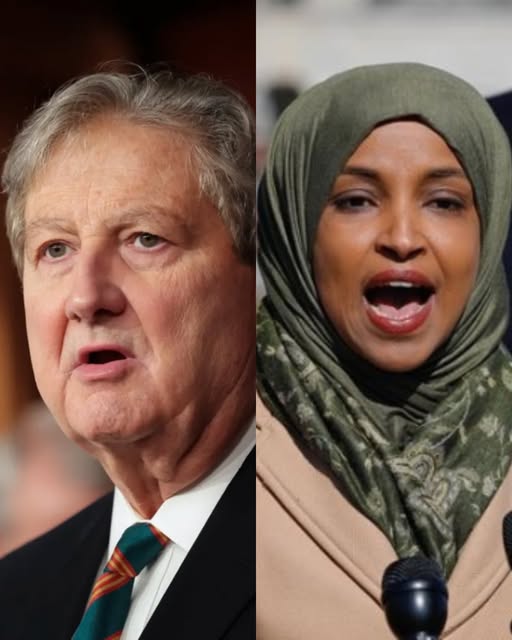
Omar’s hand, poised at the microphone as if prepared for counterstrike, lowered inch by inch. The gesture was subtle, but unmistakable — a pause in the rhythm of reaction. Ocasio-Cortez straightened, her expression sharpening, though not with defiance. It was calculation. Assessment. The look of someone who realized the terrain had shifted beneath her feet. This was not an attack to parry or a headline to outmaneuver.
Kennedy wasn’t targeting individuals. He was naming something larger — a culture that had quietly reshaped governance into theater, policy into performance, conviction into content. He was indicting the system that rewarded outrage over outcomes, optics over obligation. And in doing so, he left no one untouched.
For a fleeting, fragile moment, the choreography of politics faltered. No one was campaigning. No one was crafting a clip. No one was trending. The machinery of spectacle paused, if only for a breath.
In that suspended silence, titles felt smaller. Party lines seemed thinner. They were no longer brands, nor avatars of their movements, nor combatants in a perpetual contest for attention. They were something far less glamorous and far more demanding: custodians of a public trust that dwarfed their own ambitions.
And hanging in the stillness — heavier than any accusation — was the question his clarity had left behind.
Not whether they could win.
Not whether they could dominate the narrative.
But whether they were worthy of the power they held.