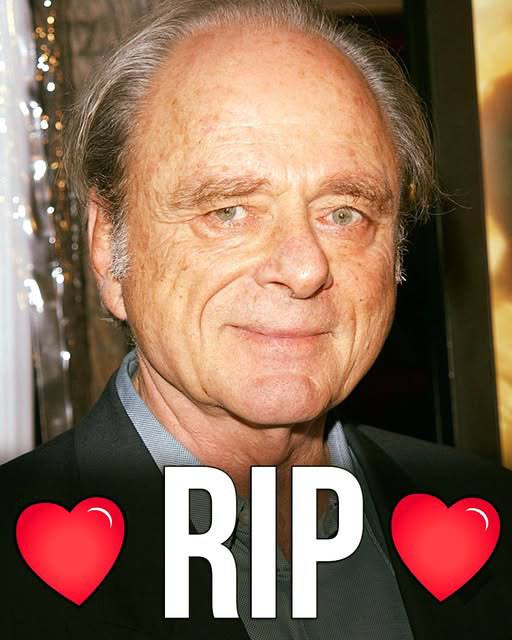
He belonged to that rare and remarkable class of actors whose very presence could steady a story the instant he entered the frame. There was something grounding about him—an unspoken authority that seemed to settle the air in a scene. In films and series such as Scarface, Training Day, Ghostbusters II, Frasier, and Ozark, Harris Yulin rarely stood at the center of the poster or basked in the loud glare of marquee billing. Yet time and again, he became the moral axis, the emotional counterweight, the quiet force around which the drama revolved.
His artistry was never about spectacle. It was about control. His performances were built on restraint—measured, deliberate, and edged with a quiet danger born of absolute honesty. He understood that power on screen does not require volume; it requires intention. A slight pause, a calibrated glance, the faint tightening of a jaw—these were his instruments. He did not demand the audience’s attention; he earned it, slowly and irresistibly. Line by line, breath by breath, he revealed the deeper currents beneath a character’s words, allowing complexity to unfold with patient precision.
Yulin’s greatness lay in his refusal to overstate. He trusted the material. He trusted silence. And most of all, he trusted the audience to meet him halfway. In a profession often tempted by grand gestures, he demonstrated that stillness can be seismic. Even when occupying the margins of a narrative, he made those margins matter. He transformed supporting roles into structural pillars, proving that significance is not measured by screen time but by depth of presence.
Beyond the camera and the stage lights, his influence grew even more profound in the classrooms of Juilliard. There, his legacy was not simply performed—it was planted. To his students, he was not merely a seasoned actor; he was a guardian of the craft. He insisted that acting was not a shortcut to applause or recognition, but a lifelong discipline—an ethical, almost sacred engagement with human behavior. He spoke of responsibility: to the text, to the ensemble, to truth itself.
Students remember his exacting standards, but also his unwavering belief that the work mattered more than the worker. Ego had no sanctuary in his classroom. What endured was rigor, curiosity, and respect for the complexity of people. He taught that an actor’s first duty is to listen—truly listen—because performance begins not in speaking, but in receiving.
Survived by his wife, Kristen Lowman, and by generations of performers shaped by his guidance, Harris Yulin leaves behind more than a résumé of unforgettable roles. He leaves a living practice, a philosophy carried forward in rehearsal rooms and on stages across the world: listen harder, speak less, and when you do speak, mean everything.